Here is the part that catches Millsboro drivers off guard: the shop that services your car is not the place that inspects it. A Delaware vehicle inspection happens in a state lane, where a technician measures, records, and hands you a result. Nobody there is going to swap a bulb or air up a tire for you.
For a Delaware vehicle inspection, Millsboro drivers get graded up the road at the state lane in Georgetown, so the work that decides whether you pass happens before you ever pull in. This post covers what the lane looks at, and the order a shop should check those items.
Where a Delaware Vehicle Inspection Actually Happens
Delaware inspections are performed at the state’s four Division of Motor Vehicles facilities: Greater Wilmington, Delaware City, Dover, and Georgetown. For a car inspection Sussex County drivers can reach without crossing the whole state, Georgetown is the lane, at 23737 DuPont Blvd. That is a short run up Route 113 from Millsboro, and a manageable trip from Long Neck, Dagsboro, Selbyville, Lewes, or the Rehoboth Beach side of Route 1.
The DMV lists its hours as 8:00 a.m. to 4:00 p.m. Monday, Tuesday, Thursday and Friday, and 11:00 a.m. to 6:30 p.m. on Wednesday.
The inspection itself is free. According to the Delaware DMV, inspections are performed at no fee to the vehicle owner, and retesting a failed vehicle is free as well, though any required emissions repairs have to be finished first.
You do not have to wait until the last week. Delaware allows the inspection up to 90 days before your registration expiration date. That window is what turns a scramble into a plan: book the shop check early, fix what needs fixing, and drive to Georgetown with a car you already know is ready.
What a Delaware Vehicle Inspection Examines
The DMV describes the safety side as covering items including tires, brakes, and windows, plus an exhaust emissions inspection and a test of the fuel system for leaks.
On the emissions side, what your vehicle gets depends on its age. Gasoline vehicles from 1996 forward and diesel vehicles from 1997 forward receive an OBD-II test, as do vehicles built after 2008 up to 14,000 pounds. Vehicles from 1968 through 1995 get a curb-idle test and a gas cap test instead. Some skip emissions entirely: vehicles in their first seven model years, motorcycles, mopeds, electric vehicles, pre-1968 vehicles, and diesels older than 1997. Testing is typically done every other year based on model year.
Why the Order Matters: Temp Tag, Permit, or Nothing
Delaware’s inspection manual does not treat every failure the same. Each failure item is assigned one of three outcomes: a temporary tag, a permit, or nothing at all. That last category is the one to respect. A “nothing” failure means you are standing in the Georgetown lot with a vehicle that cannot legally go back on the road.
According to the manual, the failures that receive nothing include no low beams at all, two or more bad tires, brake failure on two or more wheels, missing or inoperative seat belts, a door that will not latch, all turn signals inoperative, excessive smoke, a deployed or missing air bag, and a windshield with a large spider-web crack.
Compare that to the softer outcomes. An emissions failure receives a temporary tag. A single low beam out, a missing fuel cap, or shocks that bounce more than three cycles receive a permit. Same visit, same lane, very different drive home.
So a pre-visit check should start with the items that can leave you without a legal vehicle, not the ones that cost you a bulb.
1. Any Warning Lamp on the Dash
This item has the longest lead time and the most ways to go wrong. For OBD-II vehicles, the DMV lists four ways to fail the emissions check:
- The malfunction indicator light, read through a scan tool, shows a status of ON
- The light does not illuminate at all when the key is turned to on with the engine not running, meaning the bulb-check is broken
- More than the allowable number of readiness monitors are not ready
- The data link connector is missing, damaged, or will not communicate
Two of those four have nothing to do with a lit dash. A burned-out warning lamp bulb fails, because the lane cannot verify the system works, and a car with a perfectly dark dash fails if its monitors are not ready.
This is where a lot of well-meaning drivers sink their own visit. Clearing a code the night before turns the light off, and it also wipes the readiness monitors. The DMV notes that incomplete monitors typically come from a disconnected battery or recently cleared codes, and that the only cure is driving: most vehicles set their monitors after a few days that mix highway miles with stop-and-go around town. So the Long Neck commuter who clears a code on Sunday night for a Monday visit gets rejected anyway.
If a lamp is on, get it diagnosed early enough that both the repair and the drive cycle fit inside your 90-day window. A shop doing auto repair Millsboro DE drivers already trust can pull the codes, name the fault, and tell you whether the vehicle needs parts or just miles.
2. Brakes
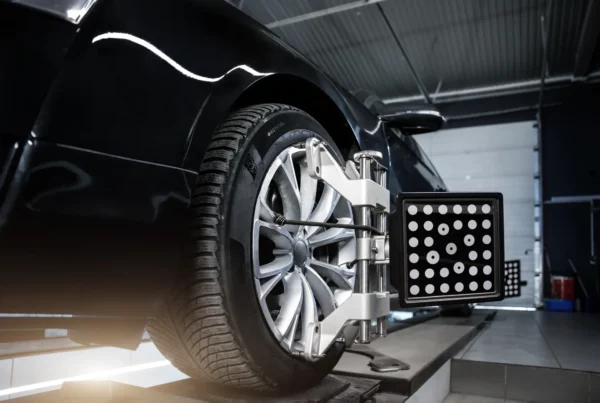
Delaware does not judge your brakes by feel. The lane drives the vehicle onto a platform tester at 4 to 8 mph and measures braking force at each wheel individually. For passenger cars and light trucks and vans under 10,001 pounds, the specification calls for a minimum of 75% brake pressure at each wheel, and the vehicle is rejected if any wheel fails to show braking action at all.
That is why brakes belong this high on the list. A car can stop confidently while one rear wheel contributes almost nothing, and no driver would feel it.
Signs worth mentioning to your shop before the visit:
- The vehicle pulls to one side under braking
- A pedal that goes softer or lower than it used to
- Grinding, or squealing that does not go away after the first few stops
- A parking brake that no longer holds on a slope
Remember the consequence tier: brake failure on a single wheel earns a permit, but two or more wheels earns nothing. Brakes are also where coastal Sussex County driving works against you, between salt air on hardware and the constant stop-and-go on Route 1 during beach season.
If a brake service inspection turns up work you did not expect, ask the shop for a current quote rather than guessing from anything you read online.
3. Tires and Tread
Tires get measured, not eyeballed, and the standard is stricter than most drivers picture. Delaware rejects a tire worn so that less than 2/32 inch of uniform tread remains, measured in any two adjacent grooves, at three locations spaced roughly evenly around the outside of the tire. For vehicles over 10,000 pounds GVW, front tires have to hold 4/32 inch.
That three-locations detail surprises people. A farm or work truck can look fine in the center grooves and still fail on a worn outer edge, because the inspector is not taking one reading in one spot.
The manual also rejects a tire for:
- A worn area exposing cord through the tread or sidewall
- Tread cuts, snags, or sidewall cracks over one inch in any direction and deep enough to expose cords
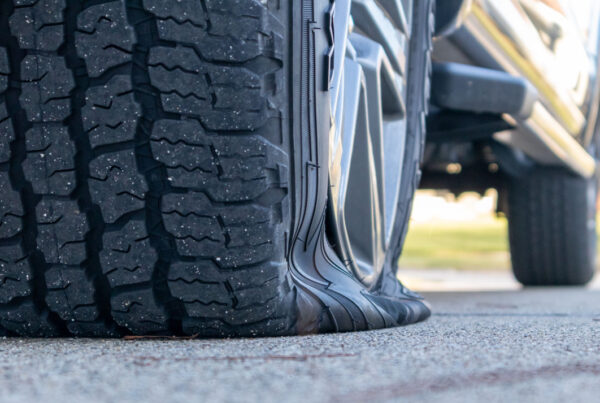
- Visible bumps, bulges, or knots, which signal the tire is coming apart internally
- Missing lug nuts
- A small emergency spare in use, so if you are still riding on the donut after a flat, deal with that before you go
Inspectors are also instructed to advise the driver if any tire simply looks low, so set your pressures before you go. And if you run studded tires, note the calendar: Delaware permits them only between October 15 and April 15.
Two or more failing tires is a nothing-tier outcome, which puts tread depth firmly in the check-it-first group. If replacements are on the table, it helps to know how to shop for tires without overpaying, and you can get a current quote for your size before you commit.
4. Lights
The lighting check is broader than the four corners of the car. Delaware’s lamp and reflector inspection covers all original equipment exterior lighting plus anything added to the vehicle. The standard in the manual is blunt: if a vehicle is equipped with a light, it should work properly. Added light bars and auxiliary lamps are inspected too, so a lifted truck build is not exempt.
Low beams are the ones to check twice. One low beam out earns a permit and the driver gets to sort it out. No low beams at all earns nothing, and that driver is not driving away. Same bulb, completely different day.
Walk the vehicle with a helper and confirm headlights on both beams, tail lamps, brake lamps, all turn signals, reverse lamps, side markers, the license plate lamp, and the hazard flashers. It is the same walk-around you would give a car before buying it used. Turn signals count too: any inoperative signal earns a permit, but all of them out earns nothing.
5. Wipers and Glass
Delaware rejects wipers if the blade shows physical breakdown of the rubber wiping element, if parts of the blades or arms are missing or severely damaged, or if an arm fails to return to its original position or the blade does not contact the windshield firmly. All front wipers have to be operating, and passenger vehicles built after 1968 need wipers capable of two or more speeds. Sun and salt air are hard on blades along this coast.
Glass has hard numbers too. A chip or star over one inch on the front window in the wiper range is a rejection item, as is a crack over five inches. A pebble chip picked up on Route 113 in June can spread past an inch after a hot summer and the first cold snap, moving from ignorable to disqualifying without you touching it.
6. Suspension Play and Shocks
The shock and strut test is about as low-tech as inspection gets. An inspector bounces one corner of the vehicle on level ground and counts. If it keeps bouncing more than four cycles, the vehicle is rejected for loss of shock absorbing function. Shocks bouncing past three cycles land in the permit tier, so this one will not strand you, but it will cost you a return trip.
The manual also rejects a vehicle for unsafe looseness or damage in any steering or suspension component, noting that unsafe free play causes wheel shimmy, erratic brake action, and steering control problems. If your vehicle wanders, shimmies at speed, or clunks over the washboard stretches of a Sussex County back road, have those joints and bushings looked at before the lane does. Worn suspension quietly ruins your tire result too, since a loose front end scrubs tread unevenly.
Preparing for a Delaware Vehicle Inspection: Millsboro Week-Before Plan
- Check your registration date and count back. Anywhere inside 90 days works, and earlier is better.
- Book the shop check first, not the DMV visit. You want results in hand before you pick a day in Georgetown.
- Deal with warning lamps first. They need diagnosis, possibly parts, then days of driving to set the monitors.
- Let the shop measure brakes, tread, and suspension play. These are the items a driver cannot self-assess accurately.
- Do your own walk-around for lights, wipers, glass, seat belts, and the fuel cap.
- Ask for a current quote on anything found before authorizing work.
- Then go to Georgetown, inside DMV hours, with a car that already passed a private dress rehearsal.
The lane grades the test. The week before is where you study.
Get Inspection-Ready at In & Out Tires in Millsboro
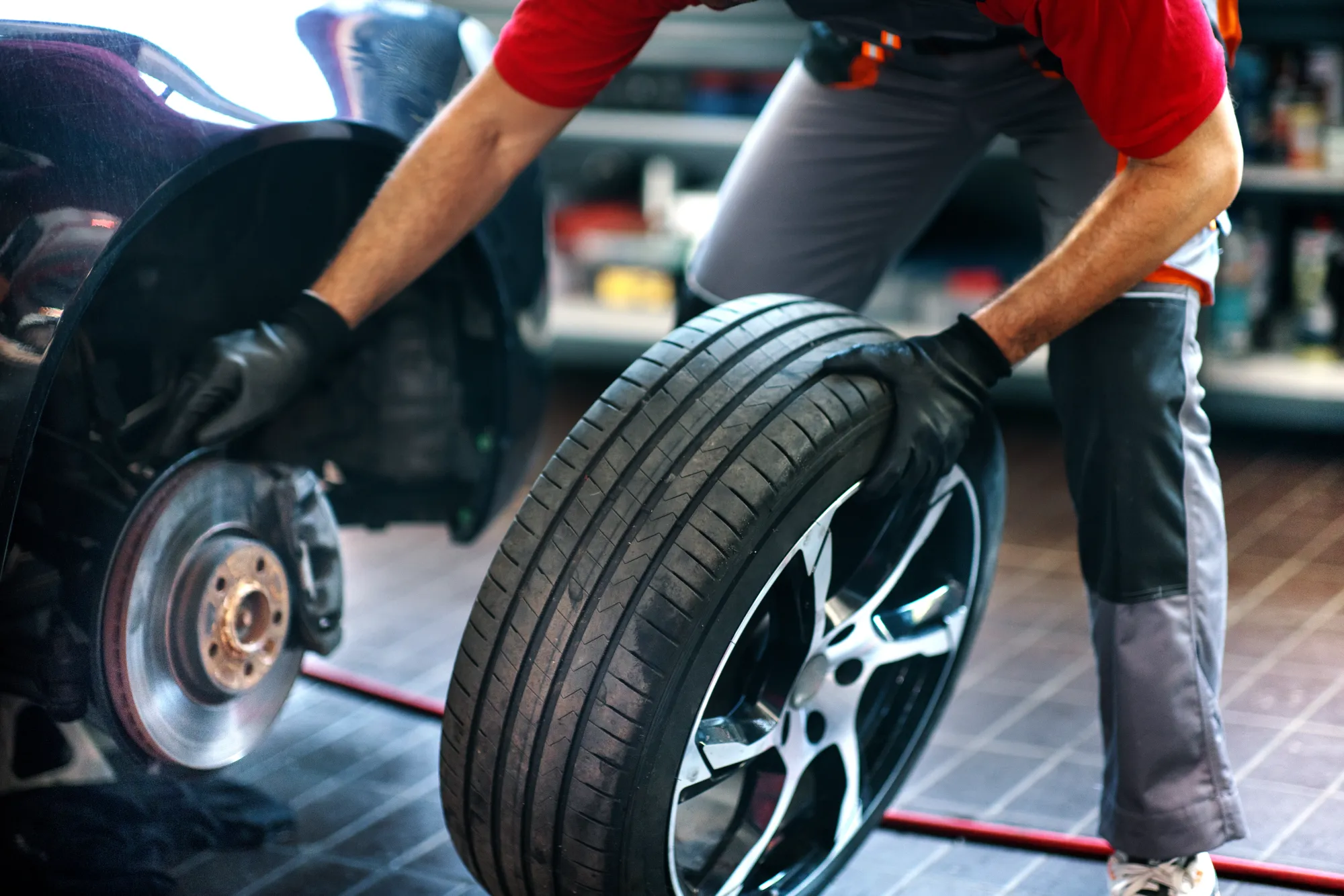
Everything a pre-inspection check finds is something you would rather learn in our bay than in a state inspection lane. Our team can measure tread the way the lane does, test brake condition, look for suspension play, pull the codes behind a warning lamp, and tell you plainly what needs doing.
We serve Millsboro, Long Neck, Dagsboro, Georgetown, Lewes, Rehoboth Beach, Selbyville, and the rest of the Sussex County coast. You can find our Millsboro hours and directions before you head over, and if anything turns up, we will give you a current quote before we start.
Do not wait until the week your registration expires. Schedule an appointment and give yourself room to pass on the first try.